



Meta Description: Learn how to find undervalued stocks in India using proven valuation techniques, financial ratios, and fundamental analysis. Discover practical strategies to identify hidden investment opportunities before the market recognizes their true value.
Every investor dreams of finding a stock that is trading below its true worth and then watching it generate substantial returns over time. This is the essence of value investing—buying quality businesses at a discount to their intrinsic value.
In the Indian stock market, opportunities to identify undervalued stocks emerge regularly due to market volatility, temporary business challenges, economic uncertainties, or simply because the broader market has overlooked a company. However, finding these opportunities requires more than luck. It demands careful research, financial analysis, and patience.
This guide explains how to find undervalued stocks in India and highlights the key factors investors should consider before making investment decisions.
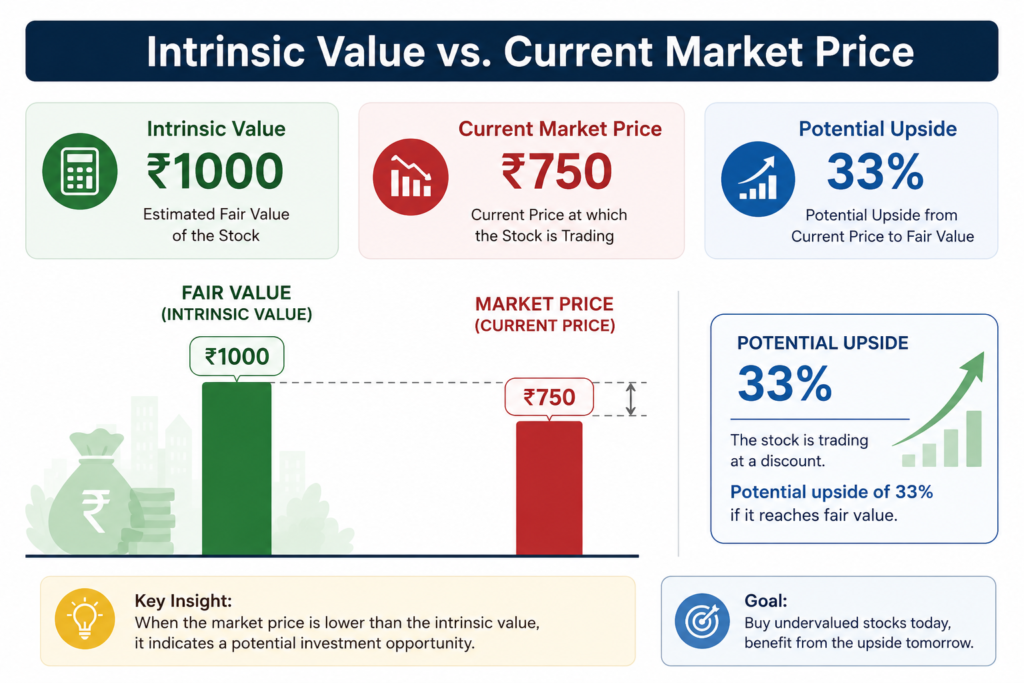
An undervalued stock is a company’s share that trades at a price lower than its intrinsic or fair value. In simple terms, the market price does not fully reflect the company’s actual worth based on its earnings, assets, growth potential, and financial strength.
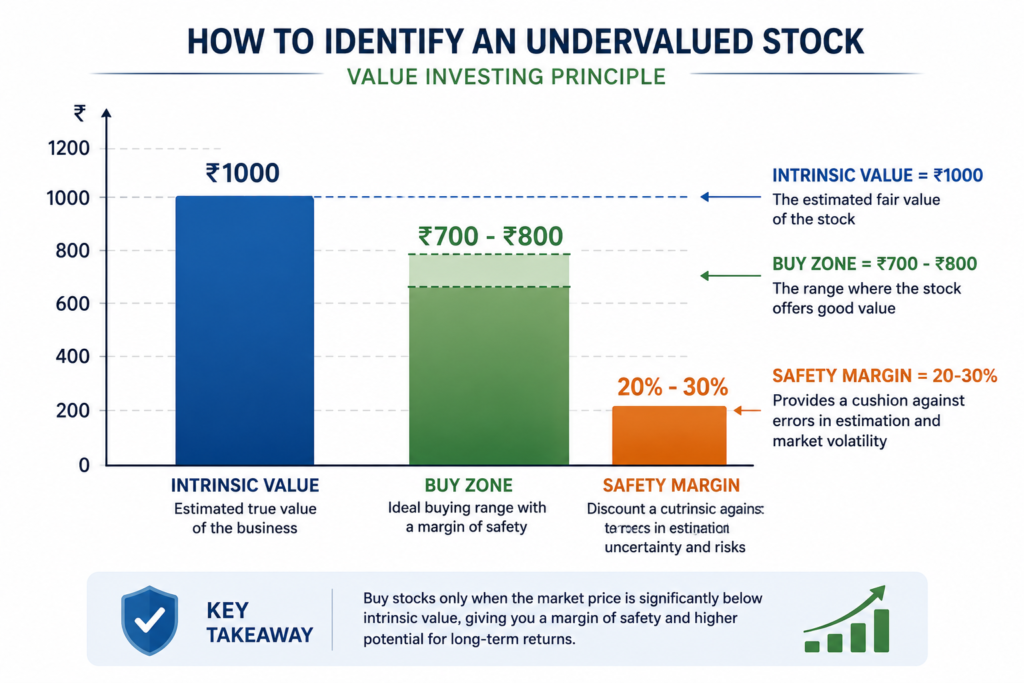
For example, if a company’s fair value is estimated at ₹1,000 per share but it is currently trading at ₹750, it may be considered undervalued.
Value investors seek such opportunities because they offer a margin of safety and potential upside when the market eventually recognizes the stock’s true value.
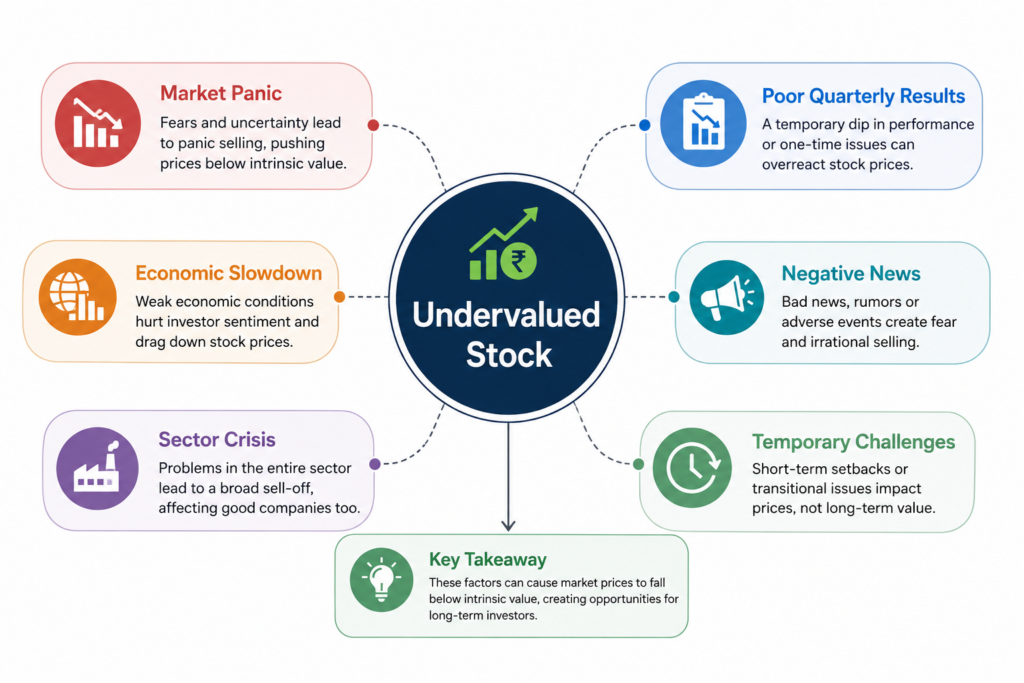
Several factors can cause stocks to trade below their intrinsic value:
Many successful investments are made when investors identify strong businesses during periods of temporary pessimism.
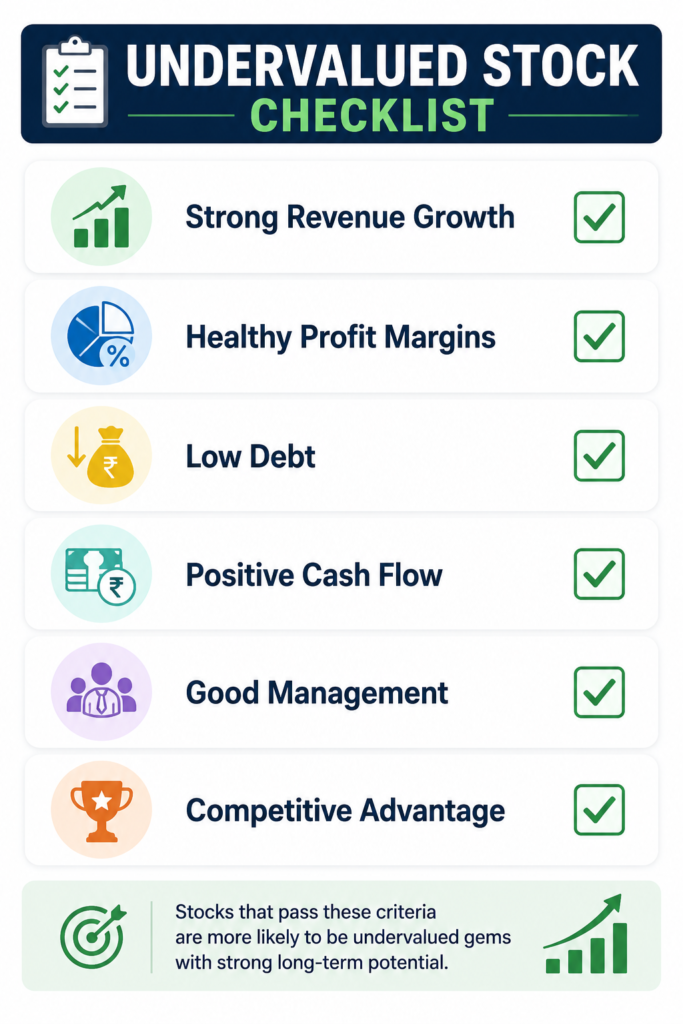
Before investing, look for companies that demonstrate the following qualities:
The company should have:
Businesses with strong brands, market leadership, unique products, or cost advantages are more likely to create long-term value.
Management quality plays a critical role in shareholder wealth creation. Review management’s track record, corporate governance standards, and capital allocation decisions.
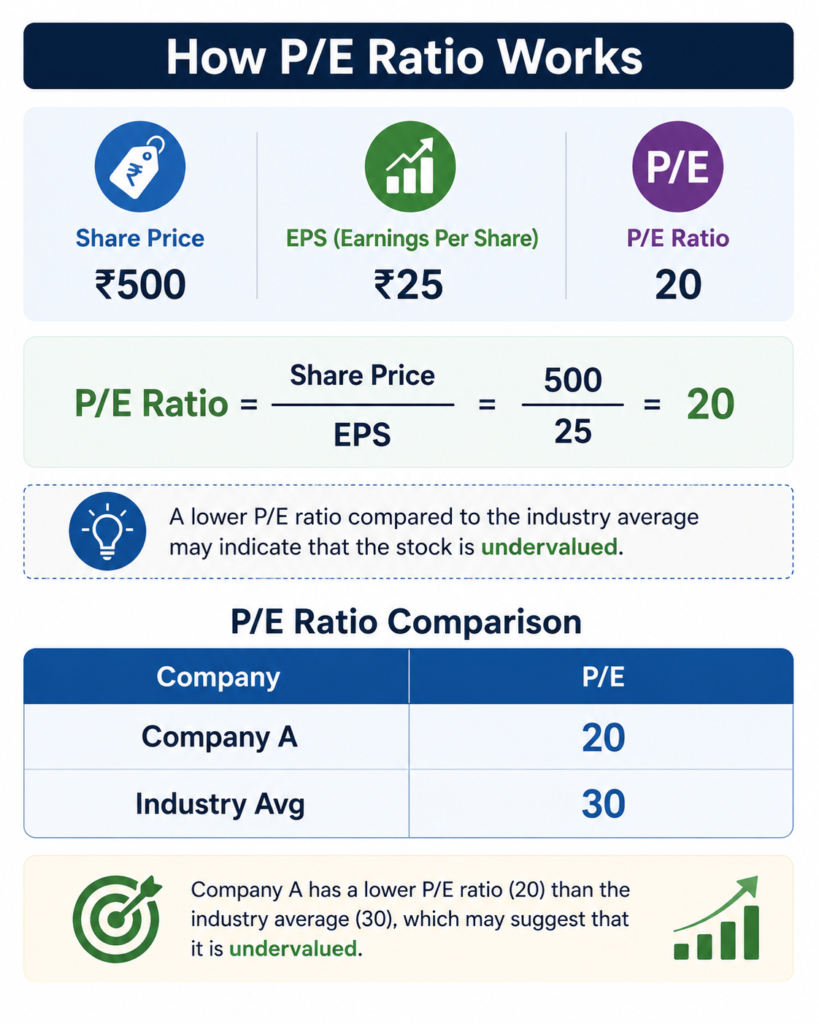
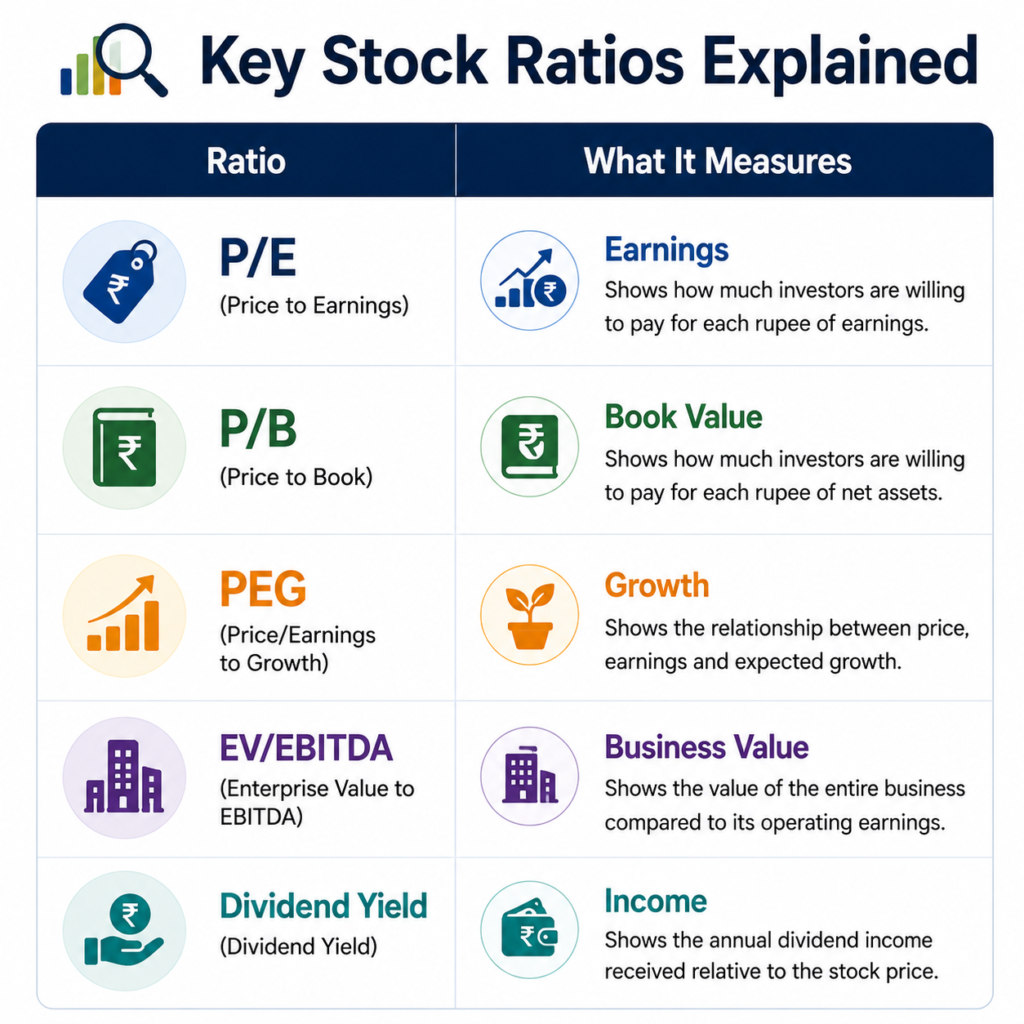
The P/E ratio measures how much investors are willing to pay for each rupee of earnings.
Formula:
P/E Ratio = Share Price ÷ Earnings Per Share
A lower P/E ratio compared to industry peers may indicate undervaluation, provided the business fundamentals remain strong.
The P/B ratio compares a company’s market value to its book value.
Formula:
P/B Ratio = Market Price per Share ÷ Book Value per Share
For banks and financial institutions, a lower P/B ratio often signals potential value opportunities.
The PEG ratio adjusts the P/E ratio for expected earnings growth.
Formula:
PEG Ratio = P/E Ratio ÷ Earnings Growth Rate
A PEG ratio below 1 is often considered attractive because it suggests growth is not fully reflected in the stock price.
A high dividend yield may indicate undervaluation, particularly when the company has stable earnings and a sustainable payout ratio.
This metric helps investors compare companies regardless of their capital structure.
Lower EV/EBITDA ratios relative to industry averages may indicate attractive valuation levels.
Successful value investing goes beyond ratios.
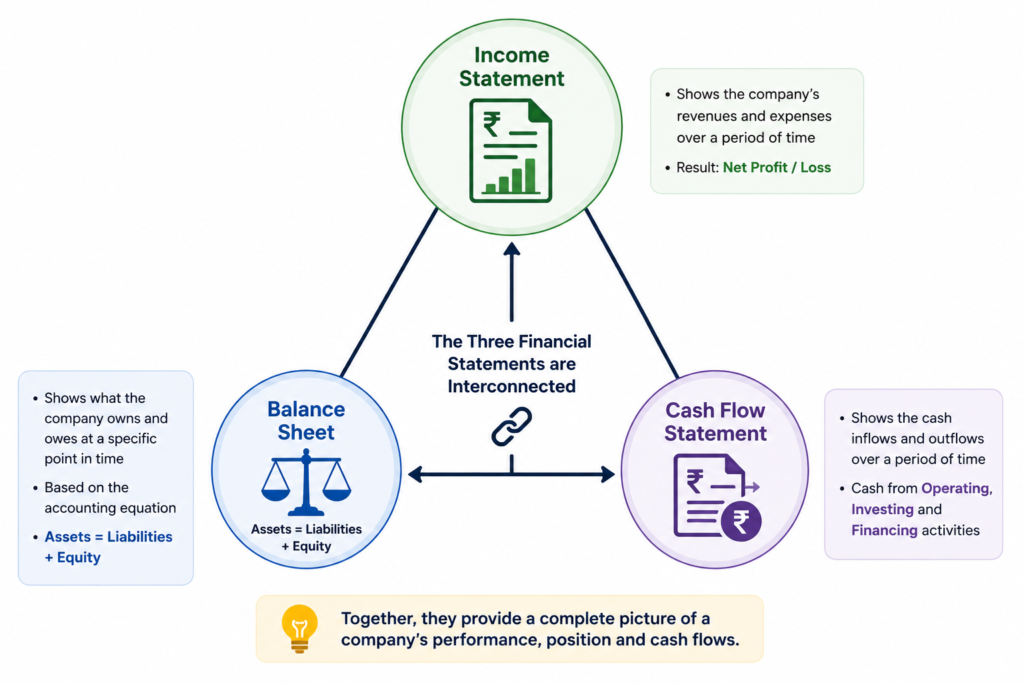
Investors should thoroughly examine:
Review:
Check:
Cash flow reveals the true health of a business.
Look for:
Many undervalued opportunities arise when markets overreact to short-term events.
Examples include:
If the long-term business outlook remains intact, these situations may provide attractive entry points.
A stock should never be analyzed in isolation.
Compare the company with competitors using:
| Metric | Company | Industry Average |
|---|---|---|
| P/E Ratio | Lower | Higher |
| ROE | Higher | Average |
| Debt-to-Equity | Lower | Higher |
| Profit Margin | Higher | Average |
Companies that outperform peers while trading at lower valuations often deserve closer attention.
One of the most common investing mistakes is purchasing stocks solely because they appear cheap.
Instead, invest in industries and business models you understand. When investors comprehend how a company earns money and competes within its market, they can make more informed decisions.
The concept of margin of safety was popularized by value investing pioneers.
Even after estimating a company’s intrinsic value, investors should seek a significant discount before investing.
For example:
This buffer protects against errors in valuation and unexpected business challenges.
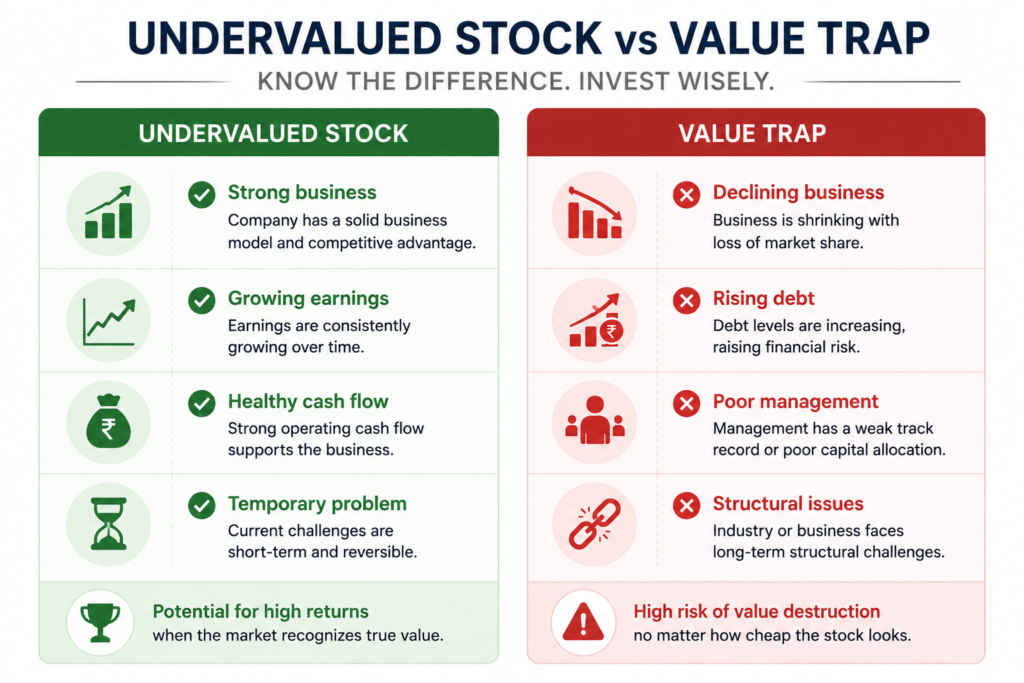
Not every low-priced stock is undervalued.
Be cautious of:
Sometimes a stock is cheap because the business itself is deteriorating.
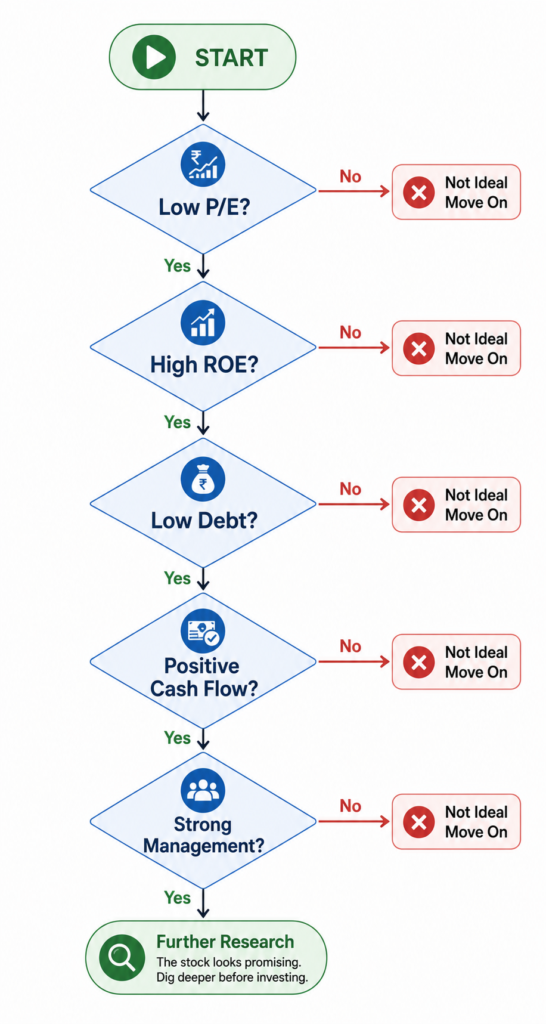
A simple screening framework may include:
This process helps narrow down a large universe of stocks into a manageable list for deeper research.
A cheap stock with poor fundamentals often becomes cheaper.
Valuation metrics should be combined with business analysis and growth prospects.
Successful investing requires long-term thinking rather than reacting to daily market fluctuations.
Undervalued stocks may remain undervalued for months or years before the market recognizes their true worth.
There is no single best ratio. Investors should evaluate P/E, P/B, PEG, EV/EBITDA, ROE, and cash flow metrics collectively.
No. A low P/E ratio may also indicate declining business prospects or structural challenges.
The timeframe varies. Some stocks recover within months, while others may take several years.
Yes. Smaller companies often receive less analyst coverage, creating opportunities for diligent investors.
Yes. However, beginners should focus on understanding financial statements and business fundamentals before investing.
Management quality is critical because leadership decisions significantly influence long-term shareholder returns.
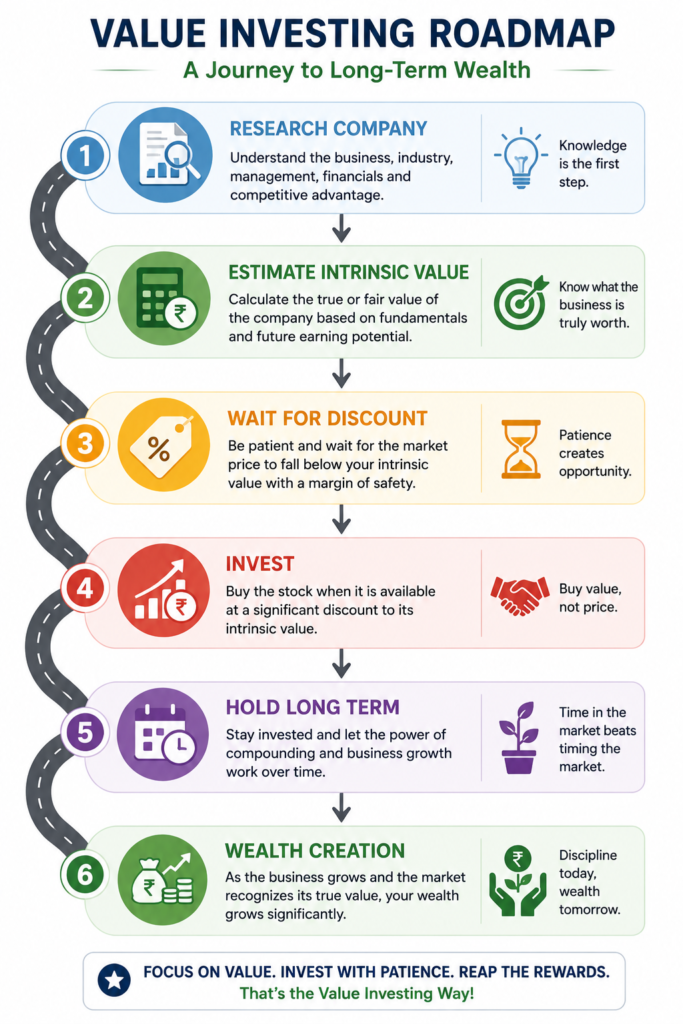
Learning how to find undervalued stocks in India can significantly improve long-term investment outcomes. While valuation ratios provide a useful starting point, successful investors combine quantitative analysis with a deep understanding of business quality, management capability, industry dynamics, and growth potential.
The best investment opportunities often emerge when strong businesses face temporary challenges that create a disconnect between market price and intrinsic value. By maintaining a disciplined research process, focusing on fundamentals, and exercising patience, investors can identify attractive opportunities and build wealth over time.
At Shah Capital Research, we believe that disciplined fundamental analysis and long-term thinking remain the foundation of successful investing. Finding undervalued stocks is not about predicting short-term market movements—it’s about recognizing value before the broader market does.